
 By admin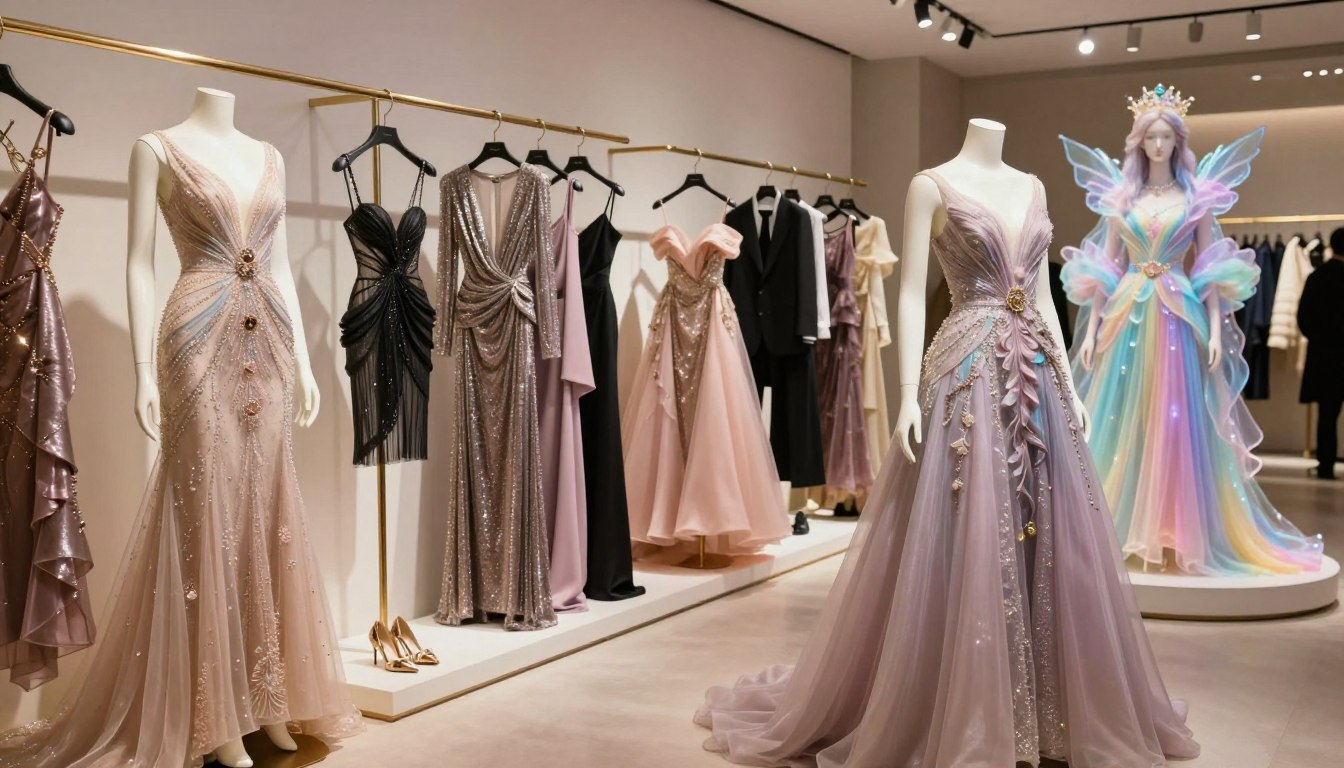
Ever thought about how your style would change with a pro stylist’s digital tools? Today, tech meets high fashion, making it easy to change your look.
With a celebrity ai wardrobe, you can try out red-carpet looks. It lets you create a digital closet that fits your style and goals.
Imagine trying out fancy clothes or dream looks without going to a store. A celebrity ai wardrobe connects your current style with your dream look. It’s time to shape your image and explore fashion tech’s endless options.
Key Takeaways
- Discover how digital tools can elevate your personal fashion aesthetic.
- Learn to define a unique visual identity across various social platforms.
- Explore the intersection of advanced technology and high-end style.
- Experiment with red-carpet looks without the need for physical fittings.
- Build a versatile digital closet that reflects your professional goals.
Mastering the Celebrity AI Wardrobe Workflow
Starting your journey to a stunning celebrity ai wardrobe means setting up a digital workspace. Organizing your space helps you make every design choice with purpose. This setup lets you focus on the creative side of fashion, not lost files.
Setting Up Your Digital Fashion Workspace
A good workflow starts with a clear folder structure for your digital assets. Organize your work by project type, like red carpet or casual street style. Consistency in file naming saves time during the design process.
Use cloud-based storage to access your high-resolution renders from any device. This keeps your wardrobe ai work backed up and ready for improvement. A clean workspace is key to professional results.
Selecting the Right AI Image Generation Tools
Picking the right software is crucial for top-notch fashion renders. Look for tools that let you control lighting, texture, and fabric physics. The table below compares popular tools to help you choose the best one for your needs.
| Tool Name | Best For | Rendering Quality | Ease of Use |
|---|---|---|---|
| Midjourney | Artistic Concepts | Exceptional | Moderate |
| Stable Diffusion | Technical Control | High | Advanced |
| Adobe Firefly | Commercial Work | Professional | High |
Defining Your Personal Style Archetype
Creating a personal style archetype guides your creative work. It’s like a celebrity curating their image. Decide on the aesthetic that defines your brand, whether it’s minimalist or bold.
Having a clear style makes your portfolio stand out. It gives your wardrobe ai projects a unique, recognizable look. Remember, your style can evolve as you grow.
Curating High-End Couture Looks with AI
Creating digital couture is a mix of old fashion knowledge and new tech skills. It combines traditional making with AI to make stunning clothes that go beyond what’s possible.
Analyzing Runway Trends for Digital Inspiration
To lead in digital fashion, watch global runway trends closely. See how designers like Schiaparelli or Iris van Herpen use shapes and materials to make theatrical masterpieces.
Look for common colors, materials, and shapes in their designs. Knowing these helps you tell your AI what look you want.
Crafting Effective Couture Prompts
Good results come from clear, detailed prompts. Describe your garment as if to a master tailor.
Include how it’s made, its mood, and the era it’s inspired by. This makes your AI’s images feel real and fancy, not just any image.
Focusing on Fabric Textures and Draping
Fabric’s feel is key to your designs’ look. Use words like silk organza, heavy velvet, or structured gazar to help the AI get light and shadow right.
Thinking about how fabric falls on the body adds class to your work. Use couture prompts that talk about “fluid movement” or “sharp architectural pleats” for better results.
Incorporating Iconic Silhouette References
Getting inspiration from fashion history is a strong base for your work. Think about shapes like the 1950s “New Look” or the big, bold styles of the 1980s.
Mixing these classic shapes with new materials makes a unique look. This mix lets you explore new digital fashion while keeping it timeless elegant.
Designing Red Carpet Awards Season Ensembles
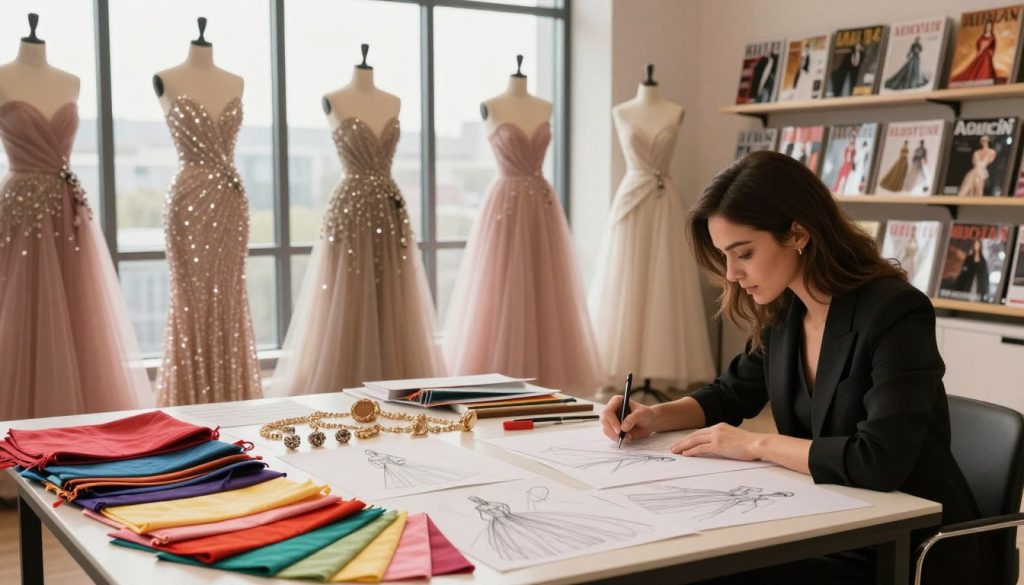
Entering the virtual awards season, your aim is to create looks that grab everyone’s attention. The red carpet is the perfect place to show off your most daring digital fashion designs. By mastering this area, you can turn simple ideas into breathtaking visual stories, perfect for a big event.
Understanding Formal Dress Codes and Expectations
Events like the SAG Awards or the Oscars have their own dress code rules. You need to understand these rules to make sure your designs are both fitting and eye-catching. Sophistication is key for that authentic red carpet look.
Begin by studying the history of formal wear to make your AI designs feel real. While you should explore new ideas, staying within “black tie” or “gala formal” helps your audience connect. This mix of old and new adds prestige to your digital work.
Balancing Avant-Garde Elements with Classic Elegance
The most memorable red carpet moments blend the old with the new. You can take a classic design, like a long gown, and add avant-garde textures or shapes. This mix makes your work stand out in a crowded digital space.
Here’s a table to guide your design choices for different red carpet themes:
| Style Category | Primary Focus | Key Element |
|---|---|---|
| Classic Elegance | Timeless Silhouettes | Silk and Velvet |
| Avant-Garde | Structural Innovation | Metallic Accents |
| Modern Fusion | Balanced Hybrid | Asymmetrical Cuts |
Refining Details for Photorealistic Results
To achieve a photorealistic look, focus on more than just a good prompt. Pay attention to how light affects different fabrics, like the subtle sheen of satin or the deep absorption of velvet. These details make the garment seem real on the wearer.
Work on how the fabric falls on the body for natural movement and tension. Lighting is your best tool for adding depth and dimension. By adjusting your camera settings and lighting, your red carpet look will seem like it was captured by a pro.
Planning Professional Photoshoot Concepts
Every great fashion image tells a story. Your preparation is key to unlocking that story. Using wardrobe ai helps bridge the gap between ideas and visuals.
Developing a Visual Narrative for Your Shoot
A strong visual narrative is the foundation of your project. Start by identifying the core theme. This could be high-octane luxury or minimalist street style.
This theme guides every choice, from fabric textures to the model’s pose.
“Fashion is the armor to survive the reality of everyday life.”
Think of your shoot as a scene from a film. A clear story ensures every element has a purpose, not just to fill space.
Coordinating Wardrobe with Lighting and Set Design
The interaction between clothing and environment sets the mood of your images. Wardrobe ai helps simulate how materials react to different lights. This prevents mistakes on the actual production day.
Make sure garment colors match the background textures. If the set is busy, choose cleaner silhouettes for balance. Consistency is key for a professional look.
Using AI to Visualize Color Palettes and Mood Boards
Experimentation is crucial in building a concept. AI tools let you test color combinations quickly. They help create mood boards for your team before shooting starts.
The table below shows how different elements impact your photoshoot:
| Element | Focus Area | Impact on Result |
|---|---|---|
| Wardrobe AI | Texture & Fit | High Precision |
| Lighting | Shadow & Depth | Mood Setting |
| Set Design | Context & Story | Visual Narrative |
By using these digital tools, you control your creative output. This approach ensures your images are polished and ready for publication.
Creating Immersive Fantasy and Editorial Looks
Digital fantasy is your playground when you break free from traditional fashion. Editorial design lets you explore surrealist or sci-fi looks that can’t be made in real life. AI helps you challenge norms and capture viewers’ imaginations easily.
Pushing Boundaries with Surrealist Fashion
Surrealist fashion defies logic and gravity. You can try out impossible shapes, like clothes made of light or accessories that float. Pushing these boundaries helps you create a unique look that stands out.
Think about adding artistic distortions to the human form. AI can change proportions, creating wonder. This turns a simple portrait into digital art.
Integrating Mythological and Sci-Fi Elements
Mixing mythological and sci-fi themes creates otherworldly looks. You might combine ancient armor with cyberpunk neon. This mix tells a compelling narrative that makes your work special.
These themes offer a rich source for creativity. Whether inspired by gods or space travelers, aim for a cohesive vision. Use your prompts to set the scene, making sure the clothes fit perfectly in their world.
Technical Tips for Complex Fantasy Textures
Creating complex textures is key for fantasy designs. For metallic scales or iridescent fabrics, be precise in your prompts. Precision is key when describing how light affects these materials.
Use specific words to guide the AI. Terms like “iridescent” or “brushed obsidian” help it understand your designs. Here’s a table to help with different textures:
| Texture Type | Visual Characteristic | Prompt Focus |
|---|---|---|
| Metallic Scales | Reflective and rigid | High-gloss, sharp edges |
| Ethereal Fabric | Translucent and flowing | Soft lighting, silk-like |
| Bioluminescent | Self-illuminating | Neon glow, dark contrast |
| Obsidian Armor | Deep black, polished | Smooth, light absorption |
Mastering these details ensures your fantasy designs look great. Consistency in texture makes your art professional. Keep experimenting to improve your digital fashion style.
Refining Your Results with Advanced Prompt Engineering
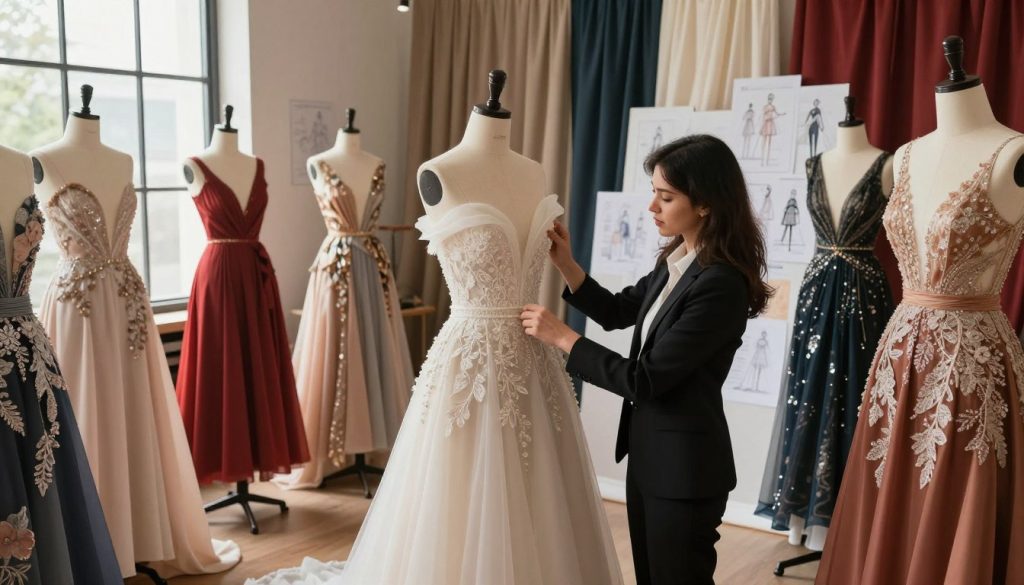
Refining your work is key to turning a vague idea into a stunning couture image. When using AI, the first try is rarely the last. By learning advanced techniques, you can control your digital fashion projects. This ensures your couture prompts always produce high-quality results.
Iterative Prompting for Precision
The secret to success is making small changes. Instead of changing everything, tweak one thing at a time. This way, you can see how each change affects the image.
Keep track of what works best. Over time, you’ll develop a style that makes your digital clothes unique.
Using Negative Prompts to Eliminate Distractions
Negative prompts help clean up your images. They tell the AI what not to include, like blurry textures or unwanted backgrounds. This helps the AI focus on the details of your design.
Using these prompts keeps your couture prompts clear. It makes the AI concentrate on the main subject, leading to sharper images.
Adjusting Aspect Ratios and Camera Settings
Technical settings greatly affect how your fashion looks are seen. Portrait aspect ratios are good for headshots, while wide settings are better for runway shots. Choose the right aspect ratio for your photoshoot’s mood.
Also, changing camera settings like focal length or aperture can add depth to your images. These changes give your digital creations a real-world feel.
| Strategy | Primary Benefit | Best Use Case |
|---|---|---|
| Iterative Tweaking | High Precision | Refining couture prompts |
| Negative Prompts | Clarity | Removing artifacts |
| Aspect Ratio | Composition | Editorial layouts |
| Camera Settings | Realism | Depth and lighting |
Integrating Wardrobe AI into Your Real-World Style
Turning your digital fashion dreams into real clothes is rewarding. It connects tech with everyday life. Your wardrobe ai ideas spark endless inspiration. But, the real magic happens when you use them in your daily outfits.
Look for patterns in your digital designs to find your style. If you often see structured blazers or flowing textures, make them your go-to choices. Consistency is key to making your digital ideas into real clothes.
Bridging the Gap Between Digital and Physical
Start by analyzing your digital designs to find your unique style. If you see structured blazers or flowing textures often, make them your go-to choices. Consistency is key to making your digital ideas into real clothes.
Fashion is the armor to survive the reality of everyday life.
Look at public figures like Tessa Thompson or Armie Hammer for style inspiration. Their bold looks on the red carpet show how to mix daring with everyday wear. This helps you keep a celebrity ai wardrobe look without losing comfort or practicality.
Sourcing Sustainable Alternatives to AI Concepts
Once you know your style, find ethical brands that match it. Many AI looks use specific textures or patterns found in vintage shops or sustainable designers. Choosing quality over quantity keeps your wardrobe stylish and eco-friendly.
| AI Concept Element | Sustainable Sourcing Method | Benefit |
|---|---|---|
| Structured Blazers | Second-hand luxury boutiques | Timeless durability |
| Organic Textures | Natural fiber manufacturers | Eco-friendly impact |
| Bold Color Palettes | Small-batch ethical labels | Unique style identity |
Building a Capsule Wardrobe Based on AI Insights
A capsule collection lets you mix and match outfits easily. Use your wardrobe ai to pick ten to fifteen pieces that show your style. This makes getting ready in the morning simpler and ensures you always look great.
Choose neutral base layers to let your bold pieces shine. Investing in quality staples lets your style evolve with your digital fashion journey. Your celebrity ai wardrobe is your guide, but your real closet is where your style truly shines.
Common Pitfalls and How to Avoid Them
Mastering AI-generated fashion means learning to fix common problems. Even with detailed couture prompts, the software can surprise you. Spotting these issues early helps improve your work and results.
Managing Unrealistic Expectations in AI Generation
AI generation isn’t a quick fix. It’s an iterative journey. Don’t expect perfection right away. Plan for several rounds of improvement.
Adjusting your settings little by little helps control the outcome. Patience is crucial when working with digital fashion. Even with couture prompts, AI might need many tries to match your vision.
Addressing Issues with Anatomy and Proportions
AI fashion often has anatomical errors like extra fingers. This happens because the model focuses on style over accuracy. Use specific keywords to avoid these flaws.
If proportions are still wrong, try in-painting tools. This method fixes specific areas without messing up the rest. Precision is key for high-end looks.
Maintaining Consistency Across Multiple Images
Creating a cohesive collection means keeping features and style consistent. Use a consistent seed number for similar structures. Also, refer to successful couture prompts to keep your aesthetic unified.
| Common Issue | Primary Cause | Recommended Fix |
|---|---|---|
| Anatomical Distortion | Complex pose requests | Use negative prompts |
| Inconsistent Style | Varying seed values | Lock seed numbers |
| Blurry Textures | Low resolution input | Upscale after generation |
| Color Mismatch | Lighting variance | Define color palettes |
Conclusion
Mastering digital fashion needs technical skill, creativity, and a love for style. You now have the tools to turn ideas into stunning clothes, red carpet looks, and fantasy outfits.
Your adventure with AI design is just starting. Use these tools to see how far your imagination can go. Every prompt you make connects your style to the digital world.
Keep trying new things in your work. Try different lighting, change your view, and see what your software can do. This helps you express yourself better through technology.
Show off your best work to the world to get new ideas. Mixing old elegance with new ideas will make your designs stand out. Keep adding to your digital closet and watch your style grow.
FAQ
What exactly is a celebrity ai wardrobe, and how does it benefit my personal style?
A celebrity ai wardrobe is a digital tool that lets you try out fancy fashion looks. You can pick styles from stars like Tessa Thompson or Armie Hammer. It helps you find your own style and see your professional dreams in digital pictures.
Which tools are recommended for creating photorealistic fashion images?
For realistic fashion images, use AI tools like Midjourney, DALL-E 3, or Adobe Firefly. These help capture details like the shine of silk or the textures of couture. Your digital closet will look real and professional.
How can I write effective couture prompts to capture runway-inspired looks?
To write great couture prompts, dive into high fashion. Use words that describe fabrics, shapes, and designs from top designers. Think about lighting and how clothes fit to get the AI to understand your vision.
How do I design digital outfits that are appropriate for high-profile events like the SAG Awards?
For events like the SAG Awards, mix classic formal wear with a modern twist. Your prompts should focus on formal styles and how clothes fit the body. This will make your digital outfits stand out.
Can I use AI to plan the visual narrative of a professional photoshoot?
Yes, AI is great for planning photoshoots. It helps with color schemes, matching clothes with sets, and mood boards. This lets you try out different styles, like those in Vogue or Harper’s Bazaar, before deciding on your final look.
What are negative prompts, and why are they important for fashion generation?
Negative prompts tell AI what not to include in an image. They’re key for avoiding mistakes like blurry textures or wrong body parts. They help keep your digital fashion looks polished and high-end.
How do I bridge the gap between my digital designs and my physical closet?
To connect your digital and physical styles, look for common themes and colors in your AI images. Use these to build a real wardrobe with pieces from brands like Everlane or Stella McCartney. This way, your physical style will match your digital look.
How do I maintain consistency when generating multiple images for a single fashion project?
To keep your images consistent, define your style and use the same prompts. Keep camera settings, lighting, and model details the same. This will make your digital fashion look professional and unified.