
 By admin
Ever wondered why some digital art looks like amateur sketches, while others shine like Hollywood movies? The key often lies in the setting, not just the subject. By moving beyond simple prompts, you can master creating a celebrity ai soundstage that grabs attention.
Going from casual user to a director takes a change in how you work. You need to treat your digital space like a real film set. This means carefully choosing every prop and background element. By focusing on structured visual consistency, your final work will look top-notch.
This guide will help you use modern tools to bring your vision to life. You’ll learn to control lighting, depth, and space to improve your work. It’s time to stop guessing and start directing with precision and purpose.
Key Takeaways
- Master the transition from simple prompting to professional cinematic direction.
- Understand how to curate virtual environments for maximum visual impact.
- Learn to maintain consistency across complex digital scenes.
- Apply filmmaking principles to enhance your creative workflow.
- Gain control over lighting and prop placement to achieve high-end results.
Understanding the Anatomy of a Professional Soundstage
To make a celebrity ai soundstage look real, you need to know about light and space. A pro studio is more than just a background. It’s a place where every part has a role. By following these rules, your digital scenes will look as good as TV shows.
Key Elements of Studio Lighting and Depth
Lighting and shadows are key for photorealism. In a real studio, lights create depth and separate the subject from the background. Use different light sources to make soft, natural shadows on your props.
Depth of field is also important for a pro look. Blurring the background makes the subject stand out. This stops the scene from looking flat or fake.
| Lighting Technique | Primary Purpose | Visual Impact |
|---|---|---|
| Key Light | Main illumination | Defines subject shape |
| Fill Light | Shadow reduction | Softens harsh contrast |
| Backlight | Subject separation | Adds depth and rim light |
Defining Spatial Relationships in AI Generation
Getting the space right is key for a celebrity ai soundstage. If your furniture doesn’t match the room’s size, it won’t look real. Make sure the distance between the subject and the background is right.
Think about how objects fit with the floor and walls. Proper placement stops subjects from looking like they’re floating. By getting these details right, you make a celebrity ai soundstage that feels real.
Selecting the Right AI Tools for Set Design
Choosing the right software is key to making professional digital environments. Whether you’re making movies or soundstage ai porn, your tool affects the quality. The right tools help you spend less time fixing things and more time being creative.
Comparing Midjourney and Stable Diffusion for Photorealism
Midjourney is known for its artistic flair and easy-to-make stunning visuals. It’s great for complex scenes and natural light. But, it doesn’t let you control small details as much.
Stable Diffusion takes a technical approach with more control over textures and materials. It’s best for projects needing perfect realism. For soundstage ai porn, it’s great for fine-tuning details like reflections and lighting.
Utilizing ControlNet for Precise Prop Placement
ControlNet gives you absolute command over your scene. You can plan where furniture, cameras, and equipment go before it’s made. This stops props from looking wrong or floating.
With this tool, every item stays in its intended position. This is crucial for keeping scenes consistent. Using these tools helps you create a workflow that always produces top-notch results.
Mastering Prompts for a Celebrity AI Soundstage
Creating a realistic celebrity ai soundstage starts with simple text. Your commands are the blueprint for every scene. With practice, you can move from basic digital art to professional cinematic environments.
Structuring Your Prompt for Cinematic Quality
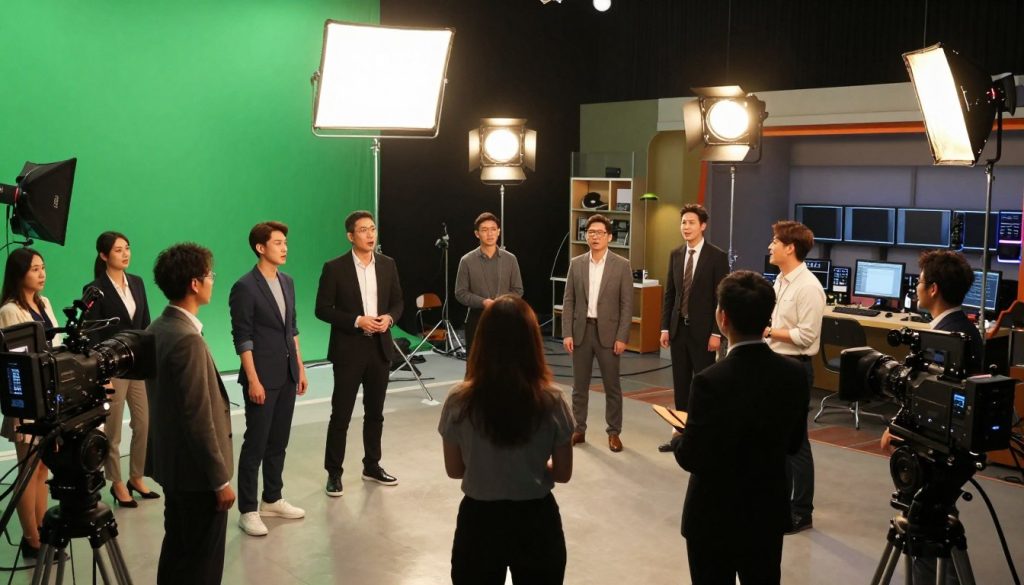
For top-notch results, organize your set design prompts well. Begin with the main subject, then the setting, and lastly the atmosphere. This order helps the AI focus on the most critical parts of your scene.
Include descriptive keywords in your prompts to set the mood and style. Use terms like volumetric lighting, depth of field, and cinematic color grading. These details help the AI create a cohesive and professional scene.
Incorporating Technical Camera Specifications
To make your scenes look like they were shot with high-end cameras, include technical details. Mentioning focal length, aperture, and sensor size helps the AI understand the physical constraints of real cameras.
The table below shows how specific technical inputs affect your scene’s look:
| Parameter | Technical Input | Visual Impact |
|---|---|---|
| Lens Type | 85mm Prime | Flattering portrait compression |
| Aperture | f/1.8 | Soft, cinematic background bokeh |
| Sensor | Full Frame | High dynamic range and detail |
| Lighting | Three-point setup | Professional studio depth |
Using these technical specifications consistently gives you more control over your scene’s look. This method ensures your set design prompts always produce high-quality results for a professional celebrity ai soundstage.
Designing Authentic Backgrounds for Celebrity Scenes
Creating a real background needs a deep understanding of TV and film visuals. The right set design prompts help move from generic AI to top-notch studio settings. Paying attention to architectural details makes your image look like a real TV set, not just a digital creation.
Replicating High-End Talk Show Environments
Top talk shows use special lighting and audience seating to look impressive. Your set design prompts should include things like overhead lights, LED panels, and tiered seats. Consistency is key to make sure everything looks real.
Think about where the host desk and guest chairs are in relation to the camera. This helps the background feel connected to the person being interviewed. A good prompt helps the AI make these details look just right.
Creating Minimalist Modern Studio Backdrops
At times, the best way to showcase a celebrity is with a simple background. Minimalist backdrops use clean lines, neutral colors, and soft lighting. Set design prompts that focus on empty space can create a sleek, fashion-forward look.
Keep the background simple and meaningful to avoid clutter. Subtlety often speaks louder than too much decoration. High-quality textures and precise lighting can make your image look polished and professional.
Integrating Props to Enhance Scene Realism
Choosing the right props is key to making your AI-generated scenes feel real. When you pick props with intentionality, you turn a generic setting into a believable place. This is crucial to avoid the uncanny valley effect that can make digital images look fake.
Selecting Iconic Furniture and Studio Equipment
Your furniture choices should match the scene’s genre. For a fancy talk show, go for mid-century modern armchairs or sleek desks that show professionalism. Make sure your set design prompts detail the furniture’s material and era for accurate AI rendering.
Studio gear is a quick way to show authenticity. Adding vintage microphones, boom arms, or broadcast monitors adds technical credibility. These iconic items make your scene feel real and functional, not just decorative.
Balancing Prop Density to Avoid Visual Clutter
Keeping your frame clean is as important as the props. You need to find the right balance to keep the viewer’s focus on the celebrity. Too many items can make your scene too busy and pull attention away from the main subject.
Use your set design prompts to control how many and where items are placed. A simple setup often looks more professional, letting the subject shine against a well-chosen background. Here’s a table to show how different prop amounts affect your scene’s mood.
| Prop Density | Visual Impact | Best Use Case |
|---|---|---|
| Low | Clean, Modern, Focused | Minimalist studio interviews |
| Medium | Lived-in, Authentic, Rich | Creative workspaces or lounges |
| High | Chaotic, Detailed, Busy | Backstage or cluttered workshops |
Applying Lighting Techniques for Studio Authenticity
Lighting is key to making an AI render look like a real TV studio. Without the right light, even the best set design looks cheap. Learning these lighting tricks will make your AI content look much better.
Simulating Three-Point Lighting Setups
To get a pro look, use the classic three-point lighting system. It has a key light, a fill light, and a backlight. Each light does something special to make your scene pop.
The key light is the main light source. The fill light softens shadows from the key light. The backlight gives a subtle glow around your subject, making them stand out.
Managing Shadows and Reflections on Props
Lighting must be realistic, especially with props. Metallic or glass items need to reflect their surroundings right. Getting shadows right helps props look like they belong in the scene.
If props seem to float or look out of place, tweak your light sources. Pay attention to shiny surfaces and how they reflect light. This makes your scene look real and engaging.
Refining Textures and Materials in AI Generations
The feel of your virtual surfaces is key to your production’s value. When you create studio environments, how light hits your props matters a lot. By improving texture refinement, you can make your work look real and detailed.
Achieving Realistic Metallic and Fabric Finishes
To avoid a “plastic” look, you need to get the material’s physical details right. Metallic surfaces need sharp highlights and small imperfections to look real. When asking for metals, use specific terms like “brushed aluminum” or “anodized steel” to help the AI.
Fabric finishes are also crucial for a realistic studio feel. Emphasize the weave and thread count of materials like velvet or linen. This adds depth to your furniture. Use descriptive terms for light absorption to show the AI that fabric should not reflect light like polished chrome or glass.
Adjusting Surface Reflectivity for Professional Looks
Controlling surface reflectivity is key for a professional look. If objects are too shiny, they lose their tactile realism and pull the viewer’s eye away. Adjust the roughness parameters in your settings to keep highlights soft and diffused.
Think about how different materials react to your lighting setup to keep things consistent. High-fidelity environments need a mix of matte and glossy surfaces for visual interest. By balancing these, your virtual set will feel like a real place, not just a computer image.
Advanced Techniques for Soundstage AI Content
Keeping digital media stable for a long time is a big challenge for creators. Whether it’s regular movies or special soundstage ai porn, keeping characters and settings consistent is key for top-notch results.
Maintaining Consistency in Character and Environment
To keep characters looking the same, you need seed management and fixed points. Using the same seed number in your tool keeps the scene’s core the same.
Here are some tips to make your work better:
- Use ControlNet to keep props and characters in the right place.
- Keep a set of reference images to help the AI understand character features.
- Apply LoRA (Low-Rank Adaptation) models to keep facial structures stable in the whole sequence.
Ethical Considerations and Content Policy Compliance
Working online means following strict safety rules and ethics. When using celebrity images, you must know the legal and moral sides of likeness rights and consent.
Always check the terms of service for your AI platform. This ensures your projects, like soundstage ai porn, meet community standards. Responsible creators are open and avoid making harmful or non-consensual content. By doing this, you keep your reputation safe and your work sustainable in the AI world.
Troubleshooting Common AI Generation Errors
Even top AI models sometimes face challenges in professional settings. Your prompts might be perfect, but the images can have small issues. These need manual intervention to look polished.
Whether you’re making mainstream media or soundstage ai porn, knowing how to fix these errors is key. A careful editing process ensures your work meets top standards.
Fixing Distorted Props and Background Artifacts
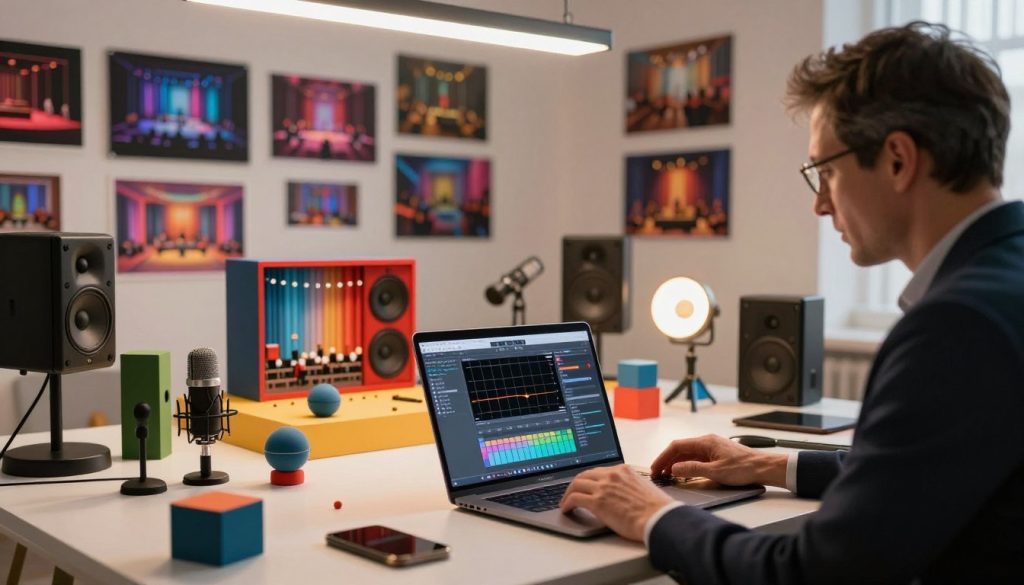
Distorted props and floating objects are common in complex scenes. Use in-painting tools to cover these areas and remake them with better prompts.
If a prop looks melted or is floating, focus on the area around it. This helps the AI get the spatial context right. For soundstage ai porn, keeping furniture and equipment edges sharp is crucial for a good look.
Correcting Perspective and Scale Issues
Perspective errors happen when the AI doesn’t match the camera angle with the scene. If things look too big or small, adjust the depth of field or focal length.
Out-painting can fix skewed vanishing points by expanding the image. This gives the AI more space to get the object sizes right.
| Common Error | Primary Cause | Recommended Fix |
|---|---|---|
| Floating Props | Poor depth mapping | In-painting with mask |
| Skewed Perspective | Incorrect focal length | Out-painting/Canvas expansion |
| Texture Artifacts | Low resolution/noise | Upscaling and sharpening |
| Scale Mismatch | Prompt ambiguity | Adjusting camera height |
Post-Processing and Compositing for Final Polish
Strategic post-production steps can bridge the gap between raw AI generations and high-end production. AI tools lay a strong foundation, but the final polish makes all the difference. This ensures your final output looks like a cohesive, high-budget production.
Using Upscalers to Enhance Background Detail
Raw AI outputs often lack the fine resolution needed for large screens or high-definition broadcasts. AI-powered upscalers increase pixel count while smartly filling in missing details. This sharpens textures and clarifies complex backgrounds without adding digital noise.
When choosing an upscaler, focus on those that preserve edges and textures well. Applying these tools correctly turns a soft, generated image into a crisp, high-fidelity asset. Always compare side-by-side to ensure the upscaling process keeps the original artistic intent.
Color Grading to Match Professional Broadcast Standards
Color grading is key to aligning AI-generated elements with professional television aesthetics. Aim to match color temperature, contrast, and saturation levels to standard broadcast color spaces. Using Look-Up Tables (LUTs) helps achieve a consistent cinematic look across shots.
Adjusting highlights and shadows ensures props and backgrounds blend well with live-action elements. Proper grading creates a unified visual language that feels authentic to viewers. The following table outlines the key tools and their primary functions in your post-processing workflow.
| Tool Category | Primary Function | Key Benefit |
|---|---|---|
| AI Upscalers | Resolution Enhancement | Increases clarity and detail |
| Color Grading Suites | Tone and Hue Adjustment | Ensures broadcast consistency |
| Noise Reduction | Artifact Removal | Creates a clean, polished look |
| Compositing Software | Layer Integration | Blends props and backgrounds |
Conclusion
Creating real celebrity soundstages needs both technical know-how and creative thinking. You now have a detailed guide to turn simple ideas into top-notch visuals with tools like Midjourney and Stable Diffusion.
Success comes from directing AI models as a pro filmmaker would. Every generation should be seen as a careful set build. Pay attention to lighting, prop placement, and texture for that movie feel.
Your digital production journey grows with each prompt you improve. Keep trying new things to find your unique style. Use these methods in your work for consistent, high-quality results that meet today’s standards.
Show off your latest work to get feedback and new ideas. Always try to do more with your software. Your next big project is just a few smart prompts away.
FAQ
How can I transition from basic prompting to professional-grade cinematic direction in AI?
To move up, see AI as a filmmaker, not just a tool. Use detailed workflows and prompts for set design. This includes spatial details, lighting, and camera gear.
Think of the AI as a top-notch crew. This ensures your soundstage looks consistent and high-quality in every frame.
Which software is best for rendering photorealistic textures and complex studio geometries?
For top-notch results, choose between Midjourney and Stable Diffusion. Midjourney shines in beauty and lighting. Stable Diffusion gives you control over props and architecture.
What role does ControlNet play in professional set design?
ControlNet is like a digital stage manager. It lets you place props and actors exactly where you want. This is key for a soundstage where everything must stay in place.
How do I write set design prompts that mimic high-end cinema lenses?
Include camera specs in your prompts. Mention “shot on ARRI Alexa” and “85mm prime lens.” This makes your images look like they were shot with a high-end camera.
How can I replicate the look of a high-end talk show environment?
For a real talk show look, focus on background details. Use prompts for textured panels, LED strips, and depth. A minimalist style and realistic surfaces make it look authentic.
What is the most effective way to manage lighting for studio authenticity?
Use three-point lighting for depth. Include a key, fill, and back light. Specify the light quality for shadows and reflections.
How do I fix distorted props and artifacts in my virtual soundstage?
Fix AI errors with “Inpainting” and “Img2Img” workflows. Mask and re-generate distorted areas. This corrects perspective and scale issues.
What post-processing steps are needed to reach broadcast standards?
Upscale your AI output with Topaz Photo AI or Magnific AI. Then, color grade in DaVinci Resolve or Adobe Premiere Pro. This makes your content look polished and cohesive.
How do I maintain character and environment consistency in complex scenes?
Use “Seed” numbers and LoRAs for consistency. Lock your seed and prompts for the same set. This keeps the scene consistent across different angles.