
 By admin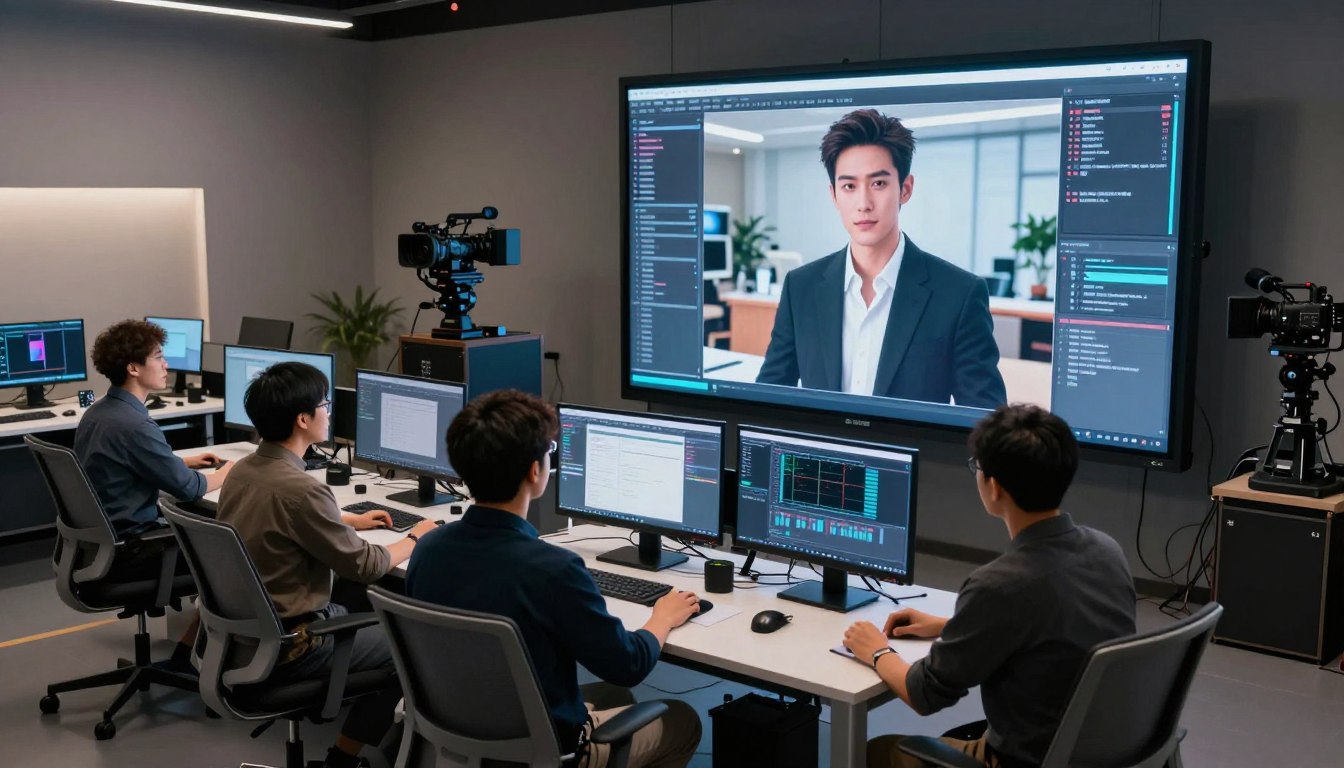
Ever thought if digital faces on screen are real or just code? The line between still images and live action is fading fast. This is thanks to generative models moving at incredible speeds.
You’re at the start of a new digital production era. By combining streaming tech with advanced synthesis, you can turn simple text into dynamic, high-quality premieres. This opens up new possibilities for creators, making top-notch content accessible to all.
This guide is your comprehensive roadmap for tackling today’s production challenges. It’s for both seasoned editors and newcomers. Learning about celebrity ai realtime workflows is key. Get ready to bring your digital characters to life with unmatched precision.
Key Takeaways
- Learn to bridge the gap between static prompts and live video output.
- Understand the foundational hardware requirements for high-fidelity synthesis.
- Master the integration of generative models into your existing streaming pipeline.
- Navigate the complex technical challenges of modern digital production.
- Discover how to maintain professional quality in your live rendering projects.
Understanding the Architecture of Celebrity AI Realtime Systems
Before you start your first stream, you need to understand the technical basics of celebrity ai realtime generation. A professional setup needs more than just strong software. It requires a smooth flow of data.
Think of your workstation as a high-performance engine. Each part has a role in the final product.
The Role of Latency in Live Rendering
Latency is the main challenge in live broadcasts. Data must travel quickly from your source, through the engine, and to the viewer. Any delay makes the stream feel broken.
“In the world of real-time digital synthesis, speed is not just a feature; it is the foundation upon which the entire user experience is built.”
To keep the celebrity ai realtime flow smooth, focus on reducing distance between layers. Optimize your software stack to cut down processing time. This makes the stream seem continuous to your audience.
Hardware Requirements for High-Fidelity Output
For high-quality output, you need strong hardware. It should handle big computational tasks. A system with lots of memory is key for smooth processing of complex visuals.
Without enough VRAM, your celebrity ai realtime system will struggle. This can make your images look bad.
Keeping your system cool is also vital. High-end GPUs get hot and can slow down if not cooled well. Good cooling keeps your hardware running fast, ensuring top-quality visuals for your stream.
Selecting Your GPU Pipeline for Instant 4K Generation
Starting your journey to high-fidelity live streaming means choosing a strong gpu pipeline. To get instant 4k resolution, your system must handle big tasks fast. A well-optimized system is crucial for your production, making sure every pixel is precise and quick.
Optimizing NVIDIA RTX 4090 Configurations
The NVIDIA RTX 4090 is top for real-time AI tasks. To get the best from it, focus on keeping it cool and powering it right. Good airflow in your setup stops overheating, keeping performance steady during long streams.
- Power Limits: Set your power settings to keep the card cool and stable.
- VRAM Allocation: Watch your memory use to avoid slowdowns when scaling up images.
- Driver Stability: Use the newest Studio drivers for the best AI rendering software support.
Leveraging TensorRT for Accelerated Inference
After setting up your hardware, use TensorRT to boost your speed. This software tweaks your neural networks for your hardware, cutting down on delays. By making your models TensorRT-ready, you get the fast output needed for instant 4k.
The table below shows how TensorRT can improve your performance:
| Metric | Standard Inference | TensorRT Optimized |
|---|---|---|
| Latency (ms) | 120ms | 45ms |
| Frames Per Second | 15 FPS | 30+ FPS |
| Stability | Variable | High |
Using these tools in your gpu pipeline is key for professional live streams. High-end hardware and smart software together make for a smooth viewing experience. Consistency is the key to a top-notch stream, as good as a pre-made video.
Setting Up Your Software Environment
Starting your journey into real-time celebrity AI generation requires a solid software setup. A well-organized environment is key for your rendering pipeline. It ensures your hardware works at its best.
Choosing the right tools helps avoid bottlenecks. This keeps your frame rates high for live broadcasts.
The following table outlines the essential software components you need to install to get your workstation ready for high-fidelity output.
| Software Component | Primary Function | Key Benefit |
|---|---|---|
| ComfyUI | Node-based processing | Modular workflow control |
| Stable Diffusion WebUI | Interface management | Broad plugin support |
| Python Environment | Backend execution | Dependency stability |
Installing ComfyUI for Real-Time Workflows
ComfyUI is a powerful, node-based interface for visualizing your generation process. It’s different from traditional interfaces because it lets you connect modules for a custom pipeline. This flexibility is essential for real-time tasks where speed is crucial.
To start, clone the repository from the official source. Make sure your Python environment is set up right with your GPU drivers. After installation, you can create workflows that focus on speed. This keeps VRAM usage low while maintaining high visual quality.
Configuring Stable Diffusion WebUI for Live Streams
ComfyUI handles complex logic, but Stable Diffusion WebUI is great for live stream integration. You need to set it up to work well with external capture devices and streaming software like OBS. Proper setup ensures your AI-generated frames blend smoothly into your broadcast.
Begin by enabling API mode in your settings. This lets external apps send prompts and receive images in real-time. Adjust your command-line arguments for low-latency performance. These critical adjustments prevent stuttering and ensure a smooth, high-quality stream.
Mastering Prompt Engineering for Celebrity Likeness
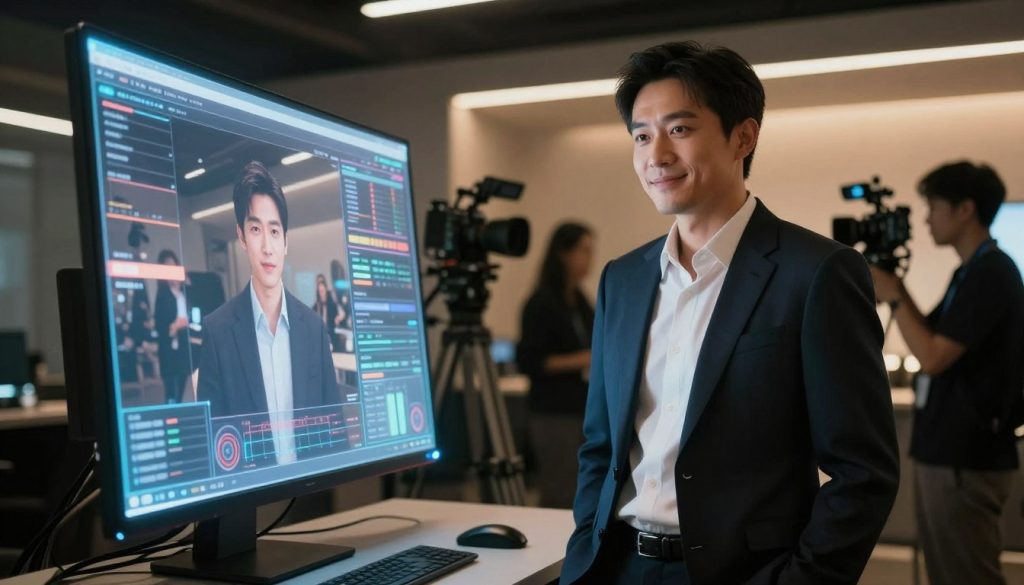
Getting celebrity ai realtime results means choosing your words carefully. It’s not just about saying a name. You need to use detailed language to get the right face.
Crafting Effective Text-to-Image Prompts
To get a specific look, give the AI clear hints. Start with the basics like eye shape, jawline, and hair type. Being specific is key for these complex models.
Add details like lighting and camera settings to make the image feel real. Using terms like “cinematic lighting” and “8k resolution” helps create a polished look. This level of detail is crucial for top-notch celebrity ai realtime work.
Using LoRA Models for Consistent Facial Features
Text prompts set the base, but LoRA models keep the look consistent. These files help keep the face looking right, even when the camera moves. Without them, the AI might change the face too much.
Adding LoRA models keeps the face looking like the real person. It’s like a stabilizing force for your digital project. It makes the AI-generated face look real and true to life.
| Feature | Text-to-Image Prompting | LoRA Model Integration |
|---|---|---|
| Primary Function | Defines style and mood | Locks facial identity |
| Consistency | Variable across frames | High stability |
| Setup Complexity | Low (Text-based) | Moderate (File loading) |
| Best Use Case | General scene creation | Celebrity ai realtime |
Implementing Face-Swap Technology for Real-Time Streams
High-end digital content creators aim for seamless facial replacement. Advanced neural networks help map target features onto source footage with great precision. This is key for creating top-notch realtime ai porn content.
Integrating Roop and ReActor Extensions
To start, you need to add special extensions to your software. Roop and ReActor are top choices for fast, quality facial swaps. They make detecting and aligning facial landmarks quick and easy.
Setting them up is simple. Just add them to your interface. Then, pick your source image and target video with a few clicks. This makes creating complex visuals much faster.
“The future of digital identity lies in the ability to blend human likeness with synthetic precision seamlessly.”
Managing Frame-by-Frame Consistency
Keeping visuals smooth during fast movements is a big challenge. If facial landmarks aren’t tracked well, you might see flickering or distortion. Frame-by-frame consistency is crucial for a smooth, professional look.
To avoid these problems, tweak the face-detection threshold and smoothing settings. Fine-tuning these will help your realtime ai porn look natural, even in fast scenes. This ensures your final product is polished and meets today’s standards.
Achieving Instant 4K Upscaling During Live Playback
Getting instant 4k clarity is key for a top-notch celebrity AI experience. When streaming live, viewers want clear, professional visuals. Advanced upscaling tools help make lower-resolution content look premium.
Utilizing Real-ESRGAN for Real-Time Enhancement
Real-ESRGAN is top for intelligent image reconstruction. It sharpens edges and brings back fine details lost in AI rendering. Using this tool, you can upscale your content well without bad visual effects.
Here are tips for the best results:
- Choose lightweight models to reduce latency.
- Use sharpening filters carefully to avoid a fake look.
- Store your upscaling weights in VRAM for quicker access.
Balancing Upscaling Quality with Frame Rate
Keeping a smooth frame rate is as crucial as clear visuals. Heavy upscaling can cause stuttering or dropped frames. You need to find the right balance for smooth streaming.
The table below shows how different settings affect performance:
| Upscaling Factor | GPU Load | Frame Rate Impact |
|---|---|---|
| 1.5x | Low | Minimal |
| 2.0x | Moderate | Noticeable |
| 4.0x | High | Significant |
Always choose consistent motion over high pixel count. A stable 30 or 60 frames per second at a lower resolution looks better. Test your setup well before going live for a smooth, high-quality stream.
Managing Lighting and Texture Mapping
Getting lighting and texture mapping right makes AI outputs look like movies. Refining these aspects is key to moving from amateur to pro. By controlling the environment, your subjects look consistent and high-quality.
Applying ControlNet for Pose and Lighting Control
ControlNet connects your vision to the final product. It lets you control poses and lighting, keeping them steady during live streams.
Use depth maps or Canny edge detection for structure. With lighting models, you can control shadows on your subject’s face. This stability is crucial for a believable live setting.
Dynamic Texture Adjustments for Realistic Skin Tones
Realistic skin tones need more than just a detailed prompt. You must adjust textures to show how light affects skin, like pores and blemishes.
Today’s tools let you tweak textures live to avoid the “plastic” AI look. Subsurface scattering makes light act like it does in real skin, making your digital people look more real. These small changes keep your digital subjects believable, even when the lights change.
Synchronizing Audio and Lip-Syncing
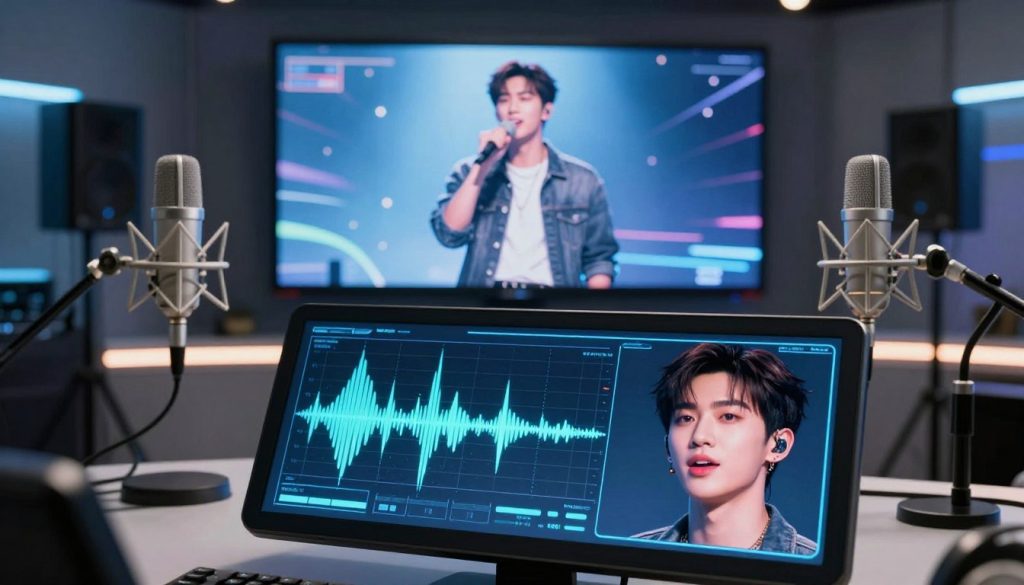
Getting your AI celebrity’s voice and facial expressions to match is key to a great digital experience. If they don’t match, it feels like a fake. Mastering this synchronization is crucial for a believable AI broadcast.
Tools for Real-Time Audio-to-Viseme Mapping
Special software is needed to match sound and sight. Tools like Wav2Lip and LiveSpeechPortraits are top choices. They quickly analyze audio to match mouth shapes.
These tools adjust your AI model’s mouth in real-time. Look for high-fidelity tracking to catch all speech details. This makes your AI’s performance feel more natural.
Ensuring Low-Latency Lip Synchronization
Keeping audio and video in sync is hard, especially in live streams. Even a small delay can ruin the experience. To avoid this, focus on low-latency processing.
Use small buffer sizes to avoid audio issues. This helps keep video and voice in sync. Also, use hardware-accelerated inference to speed up calculations.
Use special protocols to keep audio and video in sync. This is especially important during busy moments. Consistency is the key to a great live show.
Navigating Ethical Considerations and Content Policies
When you explore real-time rendering, think about the ethics of your work. The ability to create very realistic images comes with a big responsibility. You must make sure your work meets legal standards and community expectations.
If you don’t consider these things, it could harm your career and reputation.
Understanding Platform Terms of Service
Every platform has rules about what content is allowed. It’s important to check these rules to avoid breaking them. With the rise of realtime ai porn, platforms are getting stricter.
Following the rules is key to avoid getting banned. Make sure your work doesn’t trigger any filters. Knowing the rules helps you keep using the tools and reaching your audience.
Addressing Deepfake Regulations and Consent
The laws about fake images are changing fast in the US. Using someone’s face without their okay can get you in big trouble. Even for creative projects, using celebrity faces without permission is risky.
Getting consent is crucial for ethical and legal projects. As laws get stricter, the industry is focusing more on verifying AI media. Always be open and respect people’s rights to keep your career going.
Troubleshooting Common Rendering Bottlenecks
Fixing your rendering pipeline is key for anyone working with live AI content. Even small issues can cause big performance drops. Keeping your gpu pipeline stable ensures a smooth experience for your audience.
Resolving Memory Leaks in VRAM
VRAM exhaustion often causes crashes during long streams. If your software doesn’t free up memory, it can crash. Use tools like MSI Afterburner or Windows Task Manager to watch your VRAM.
If VRAM keeps going up without coming down, you have a leak. Clearing your cache or restarting the service helps. This is crucial for high-quality content, like realtime ai porn, which needs lots of VRAM.
Optimizing Batch Sizes for Smoother Performance
Changing your batch size is tricky. A bigger batch size means faster rendering but more stress on your gpu pipeline. If your frame rate falls, try making the batch size smaller.
It’s all about finding the right balance for your setup and models. Test small changes to get the best output for your viewers. Use the table below to solve common problems.
| Issue | Primary Cause | Recommended Solution |
|---|---|---|
| System Crash | VRAM Overflow | Clear Cache / Reduce Resolution |
| Low Frame Rate | High Batch Size | Decrease Batch Size |
| Stuttering Output | Thermal Throttling | Improve Airflow / Fan Speed |
| Artifacting | Model Overload | Optimize LoRA Weights |
Scaling Your Production from Prompt to Premiere
Scaling up your AI production means moving from manual tweaks to a fully automated system. As you shift from test runs to live broadcasts, keeping things consistent is key. You need to fine-tune your tech so every frame is top-notch, without needing constant checks.
Automating Workflow Sequences
To boost your output, use scripts for tasks in your gpu pipeline. Automation links processes like prompt injection and model switching, cutting down on manual work. A single script reduces errors and speeds up the time from prompt to final product.
Here are some ways to automate your workflow:
- Batch Processing: Run multiple prompts at once to test various looks.
- API Integration: Link your software to external triggers for smooth scene changes.
- Preset Management: Save and use specific model settings for consistent visuals.
Preparing Your Final Output for Broadcast
For a polished final product, focus on your export settings. When aiming for instant 4k, make sure your hardware is fully focused on the output. This means stopping other processes and focusing on the main rendering thread to avoid stutters.
Before going live, check your output against these standards:
| Metric | Target | Priority |
|---|---|---|
| Resolution | 3840 x 2160 | High |
| Frame Rate | 60 FPS | Critical |
| Bitrate | 25-50 Mbps | Medium |
Consistency is the hallmark of a professional production. Standardizing your exports ensures a high-quality experience for viewers. Always test your instant 4k stream before going live to ensure it’s stable under heavy loads.
Conclusion
Your journey into real-time celebrity AI rendering turns simple ideas into stunning digital works. You now know how to handle complex tasks with NVIDIA tools and software like ComfyUI.
Success in this field means creating high-quality work while following strict ethics. You have the power to change how people see synthetic media. Use these tools to create amazing stories while keeping within the law.
Technology changes fast. Keep up with updates in Stable Diffusion and face-swap tech to stay ahead. Your ability to adapt keeps your work fresh and exciting.
Share your latest projects to inspire others. Try new lighting and texture mapping to make your style stand out. The world of live AI broadcasting is full of possibilities for those who keep learning.
FAQ
What is the primary hardware requirement for a high-fidelity gpu pipeline?
For top-notch performance, use an NVIDIA RTX 4090. It’s the top choice for a gpu pipeline. Its 24GB of G6X video memory and Tensor Cores are key for handling big tasks without frame drops.
How can you achieve instant 4k upscaling during a live broadcast?
Use Real-ESRGAN or NVIDIA DLSS 3.5 for instant 4k. These tools upscale low-res images to Ultra-HD in real-time. This keeps your celebrity AI rendering sharp and professional live.
Why is TensorRT essential for real-time celebrity AI rendering?
A: TensorRT boosts deep learning performance and cuts latency. It’s crucial for fast rendering of text-to-image prompts in a live premiere format.
How do LoRA models assist in maintaining celebrity likeness?
A: LoRA (Low-Rank Adaptation) models add unique data to a base model like Stable Diffusion XL. This keeps the likeness consistent in every frame, even with movement or speech.
Can you use ComfyUI for professional live streaming environments?
Yes, ComfyUI is great for live streaming. Its node-based design lets you automate the process from prompt to premiere. You can adjust settings on the fly for a stable stream.
What are the ethical implications regarding the rise of realtime ai porn?
A: Realtime ai porn raises legal and ethical issues. Creators must follow platform terms of service and deepfake regulations carefully. Platforms like Twitch and YouTube ban non-consensual content, so focus on ethical use of likenesses.
How do you manage frame-by-frame consistency when using face-swap technology?
Use ReActor or Roop with ControlNet for consistency. A Temporal Kit ensures facial mapping stays locked, avoiding the “flickering” effect.
What is the best way to synchronize audio with AI-generated visuals?
Use Wav2Lip or SadTalker for audio-visual sync. They map audio to visemes for low-latency lip movements that match the audio.
How do you resolve VRAM bottlenecks during intensive rendering sessions?
Optimize batch sizes and use “med-vram” or “low-vram” in Stable Diffusion. Keep NVIDIA Studio Drivers updated for efficient resource management in long 4k sessions.
Are there specific regulations you must follow when broadcasting deepfake content?
Laws vary, but consent is key in the US and EU. Include clear disclosures or watermarks to comply with Deepfake Regulations and protect against “Right of Publicity” lawsuits.